
























How to Build an Incentive Rewards Program That Drives Sales and Builds Loyalty
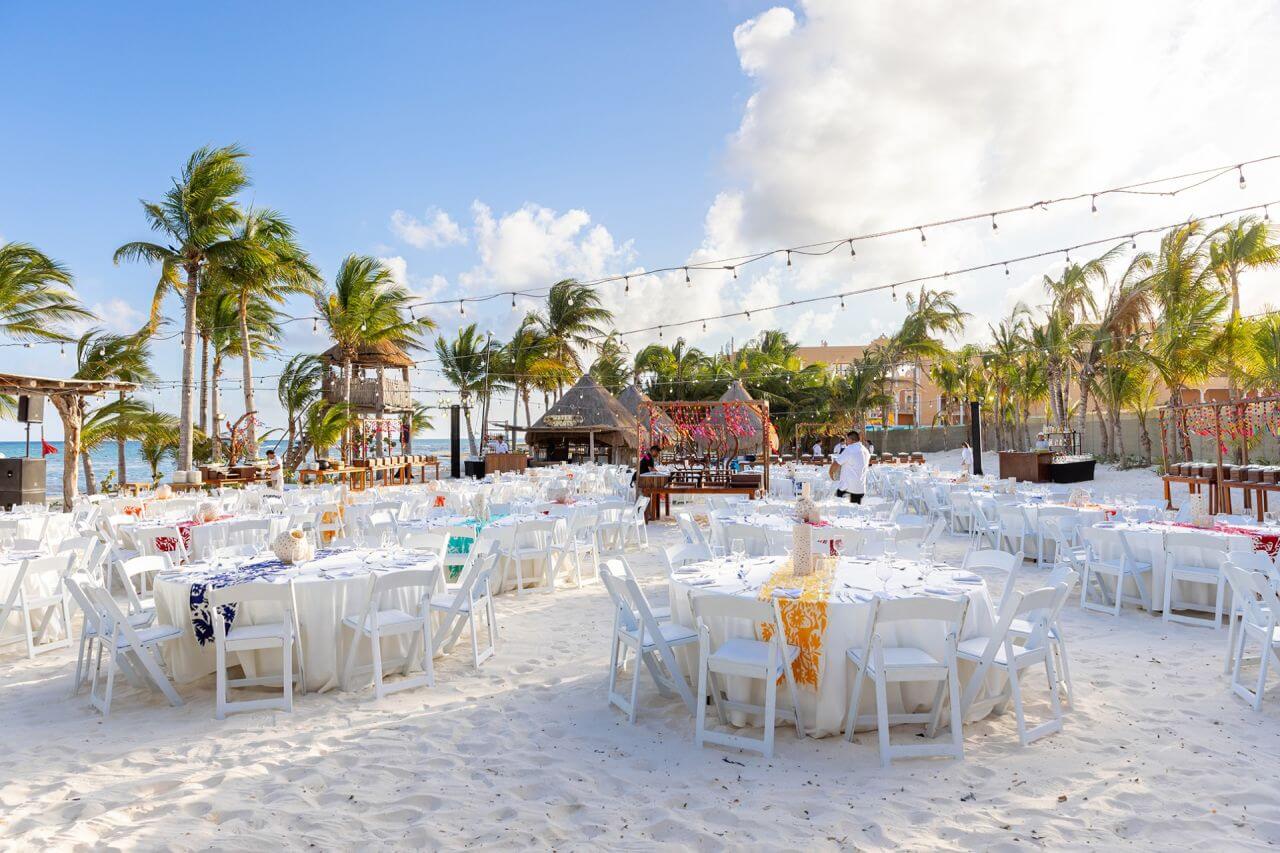
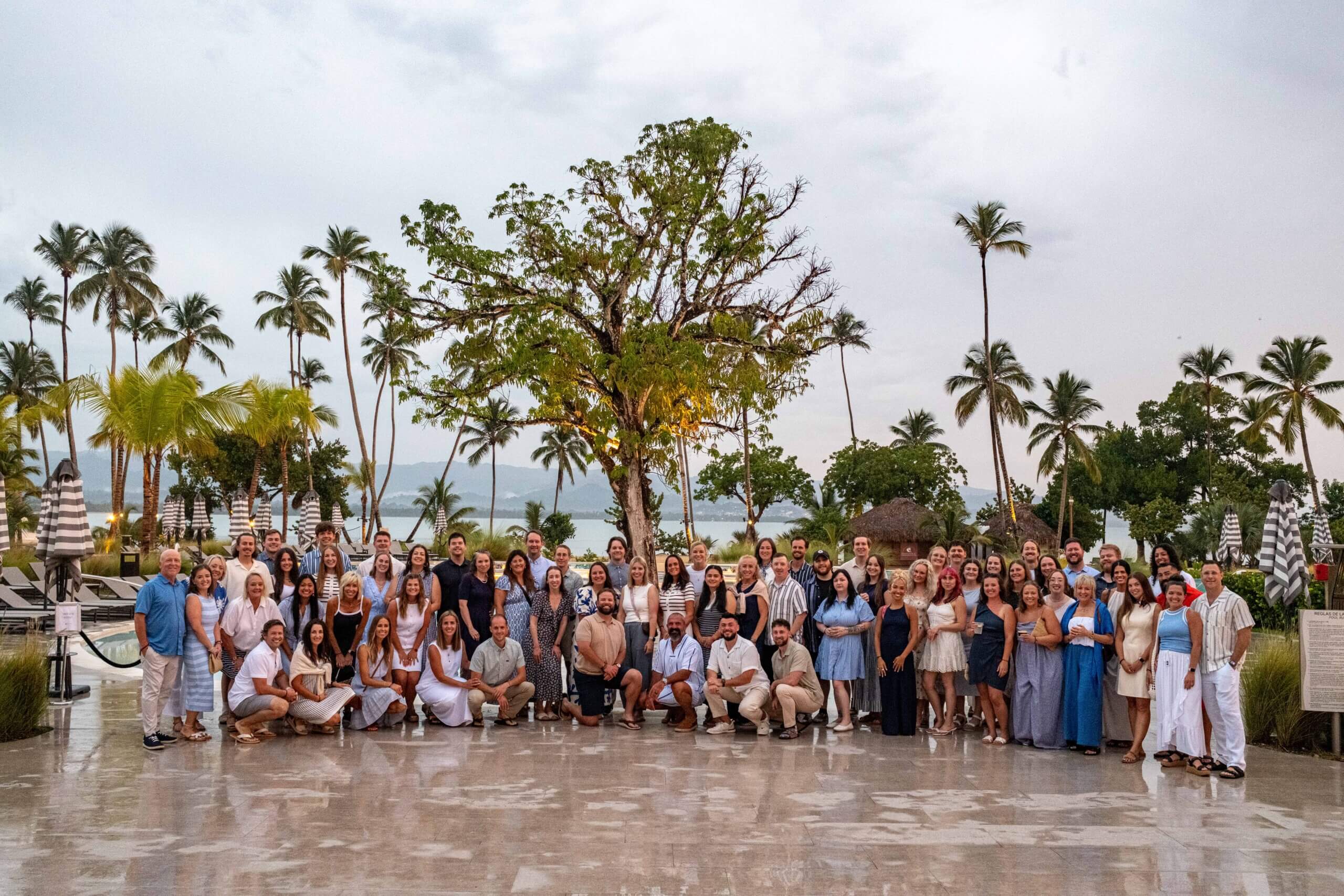
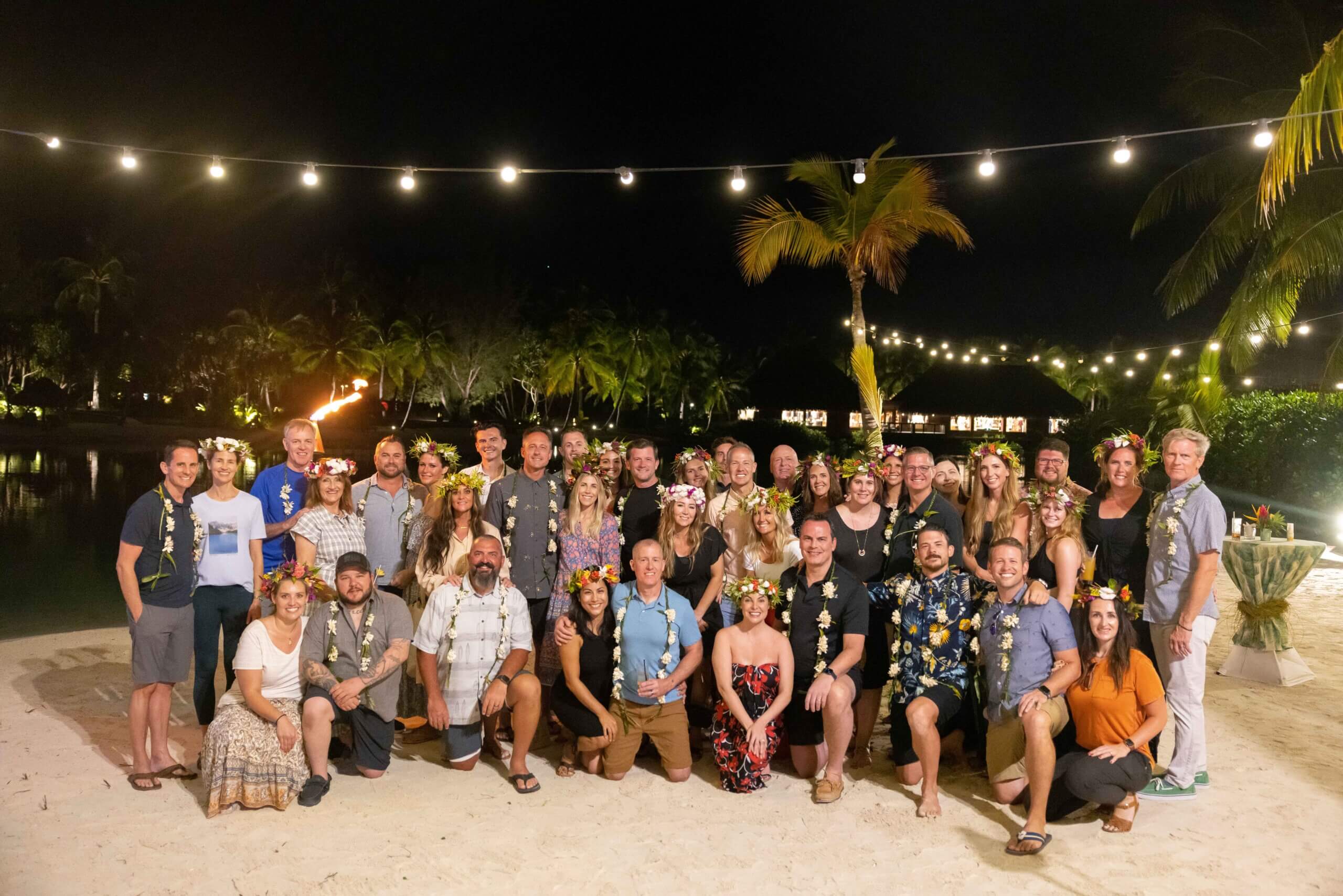
Picture your sales team, customer service staff, and operations crew sitting down to dinner together after a day exploring somewhere new. They helped the business reach a goal, earned their place on the trip, and now get to celebrate together.
That experience starts months before anyone boards a plane. It starts with a rewards system that makes the goal clear, gives employees a fair way to earn recognition, and offers something they want to work toward.
For HR professionals and executive teams, the opportunity is to connect everyday performance with meaningful rewards. A points-based program can make progress visible. Incentive travel can give that progress a destination.
The same framework can help wholesale suppliers strengthen customer relationships. Employee programs reward workplace contributions; customer programs reward an account’s purchasing growth and engagement. Both need clear rules and a reward worth earning.
Start with the business outcome
Choose two or three priorities before selecting rewards. For sales, that might mean profitable growth, new customers, or stronger renewals. For the broader workforce, it could mean faster customer onboarding, fewer errors, or better service.
Make each objective measurable and time-bound. For example, aim to increase new-business gross profit by 8% over the next year while maintaining an agreed customer retention rate. Record the starting numbers so you can evaluate results later.
The Incentive Research Foundation recommends measurable objectives, clear rules, defined audiences, tracking, and a communication plan as foundations of program design. [1]
If employee retention is a priority, measure it directly. Rewards should support competitive pay, good management, and opportunities to grow. Employees still need those things after the trip is over.
Give different roles a fair path to the same reward
Sales results depend on people across the business. Customer service protects relationships. Operations deliver the promise. Support teams remove obstacles. An effective program gives those employees a way to qualify through contributions they can influence.
Use separate scorecards for different roles, with comparable difficulty and reward opportunity. These are examples to adapt:
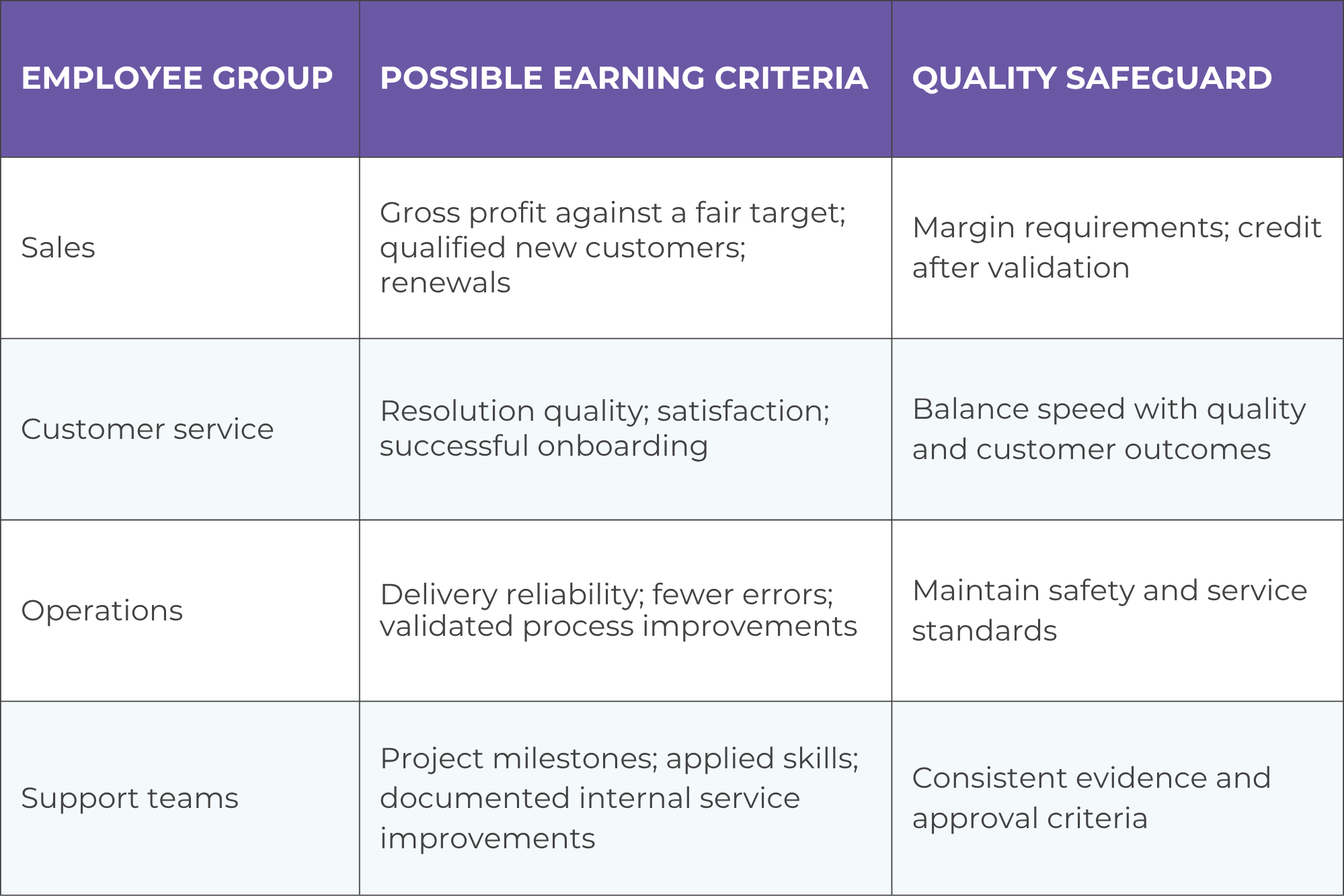
Calibrate targets for territory potential, workload, and available opportunities. Review who is earning rewards by role, location, and manager. A program that consistently overlooks one group needs attention.
IRF research released in September 2026 identifies fairness, clear earning criteria, and consistent application as important to program credibility. It also emphasizes personally relevant rewards. Ask employees what they value before choosing the reward mix. [2]
Make points easy to understand
Employees should be able to answer three questions: What earns points? How many can I earn? What do those points unlock?
Keep the initial earning menu short. Focus most points on meaningful results, then add limited opportunities for verified improvements or collaboration. Define how partial achievement earns credit and when results become final.
Avoid rewarding activity without checking its value. Counting calls alone can encourage low-quality calls. Measuring ticket speed alone can encourage rushed service. Pair volume or speed with a quality measure.
For smaller rewards, publish the redemption value and available choices. If 1,000 redeemable points buy a $50 reward, make that relationship clear and stable. Finance should budget for outstanding balances as well as expected redemptions.
Keep travel qualification separate from the spendable rewards balance. Redeeming a gift card should not push someone farther away from earning the trip. Two clearly labeled balances can prevent that frustration.
Combine personal achievement with a shared team goal
We recommend letting individual performance earn the core trip, then using a shared business goal to unlock an additional group experience. This gives employees ownership of their qualification while creating a reason to help each other succeed.
Here is an illustrative annual structure, not an industry benchmark:
- Individual qualification: Each quarter, employees earn up to 250 travel qualification points against their approved role scorecard. Meeting the quarterly target earns 200 points; defined stretch performance earns up to 50 more.
- Annual travel threshold: Employees qualify at 800 points across four quarters, subject to published quality and eligibility requirements. Everyone who meets those requirements earns the trip.
- Shared team goal: If the participating business unit achieves its published growth goal and customer quality requirement, every qualifier receives a preannounced additional experience, such as a private excursion or special celebration dinner.
- Ongoing recognition: Smaller, redeemable rewards recognize progress during the year without using up travel qualification points.
Test the scoring against historical results before launch. Check that a solid performer in each role has a realistic route to 800 points and that stretch points reflect meaningful achievement.
Publish partial-credit rules, new-hire treatment, leave provisions, and employment eligibility requirements. Explain whether unused qualification points expire at the end of the cycle. The shared goal should add to an individually earned trip, with its funding approved in advance.
Use customer rewards to grow wholesale relationships
Wholesale suppliers can use points and incentive travel to give contractors, dealers, retailers, and other business customers a reason to build a stronger relationship with them.
The IRF’s 2026 channel incentive research emphasizes that independent business partners can choose whom they buy from. It recommends rewarding useful actions across the relationship, including education and engagement, alongside completed sales. [5]
Start with the customer behavior you want to encourage:
- Profitable growth: Award points for eligible purchases above an agreed baseline, with targets suited to each account’s opportunity.
- Broader purchasing: Offer limited bonus points for adopting relevant product categories, subject to a validated purchase requirement.
- Stronger product knowledge: Recognize approved training or demonstrations that help customers select, install, or sell your products successfully.
Give customers a simple earning statement tied to your order and invoicing system. Define eligible products, the point rate, and when purchases qualify. Credit eligible paid invoices, deduct returns and credits, and disclose exclusions and expiration dates. Cap training bonuses so they support the purchasing objective.
Run a separate customer ledger with clear account ownership. Publish whether the customer business or an approved named participant receives the reward, how many travel seats each account can earn, and who may attend. Confirm the customer’s gift and incentive policies before enrollment.
For travel, consider account tiers based on purchase growth and contribution margin. Publish the exact points threshold and quality requirements for each tier. Targets based on growth opportunity can give smaller accounts a credible path alongside larger customers.
A qualifying account might earn two places on a hosted trip, while a shared growth milestone unlocks an additional experience for all qualifiers. Plan time for customers to connect with your team and other business owners, along with a celebration of what they achieved.
Measure repeat purchasing, account retention, category adoption, and incremental gross profit after reward costs. Check whether growth continues after qualification so the program encourages durable purchasing rather than simply bringing next quarter’s orders forward.
Choose a trip people want to earn
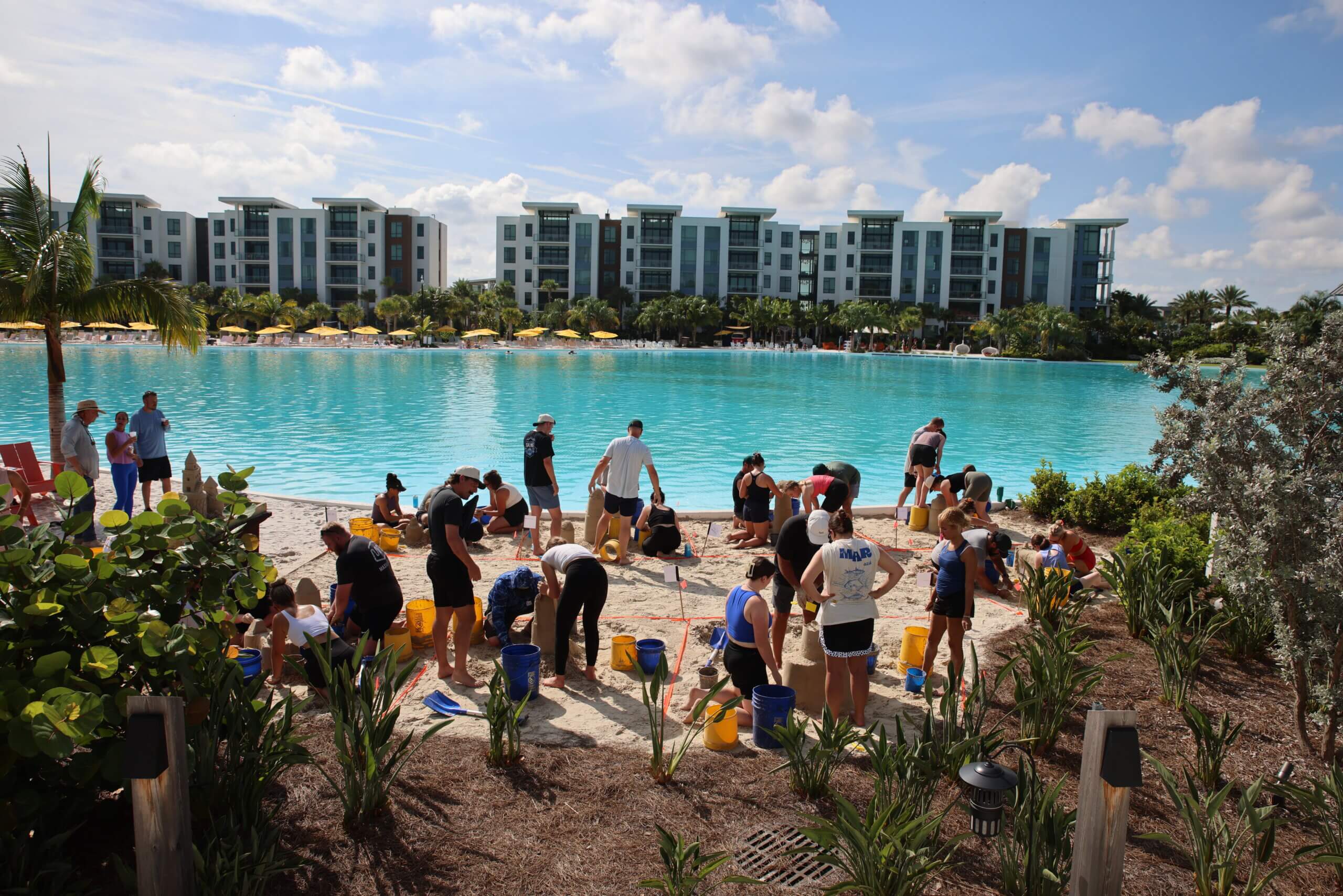
A group incentive trip offers room for recognition and connection that a reward catalog cannot provide on its own. Colleagues can spend time together outside their usual routines, meet leaders in a more relaxed setting, and celebrate the work that got them there.
Build the experience around your employees. Survey their interests, preferred timing, and travel constraints. Consider whether allowing a guest would make the reward more meaningful.
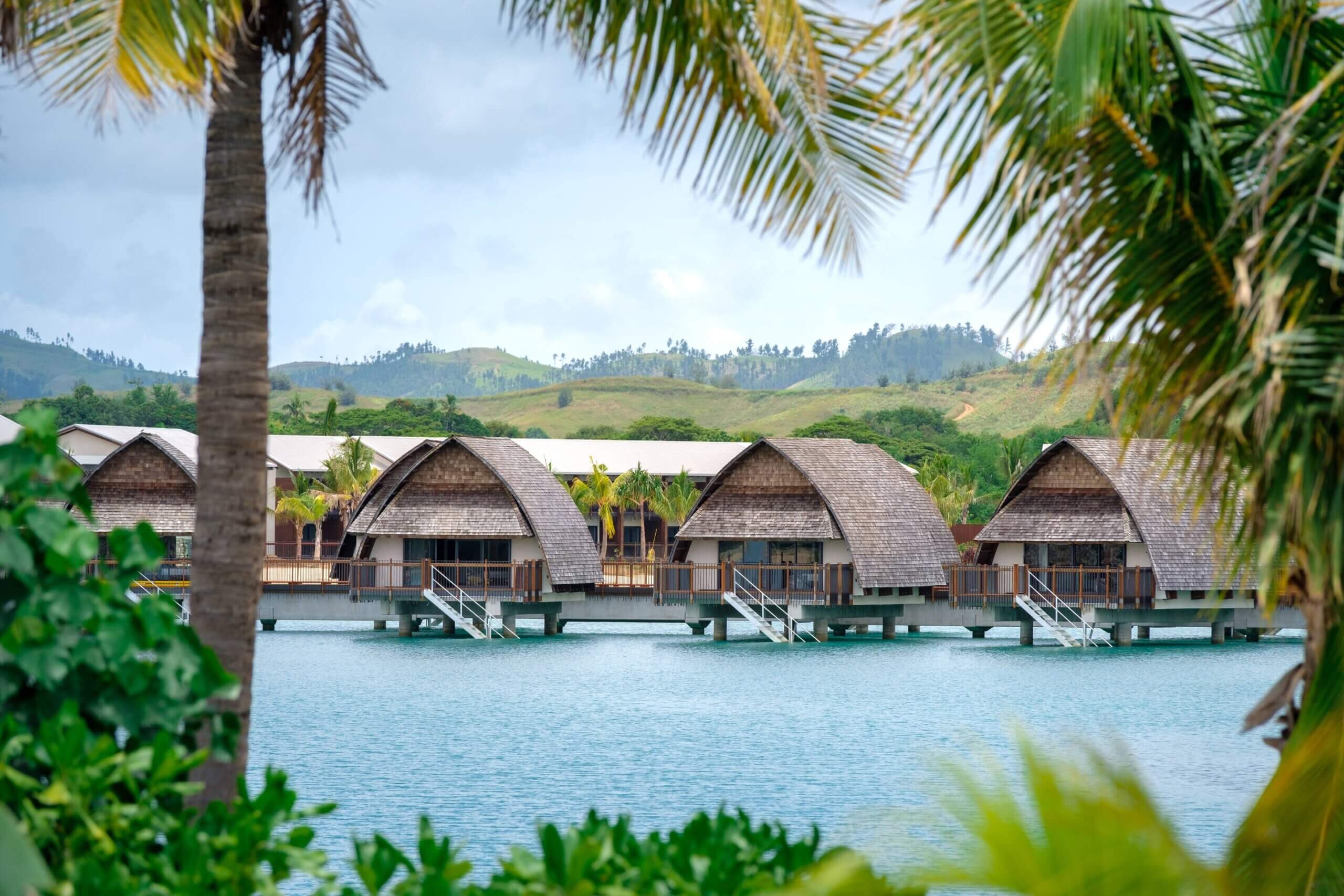
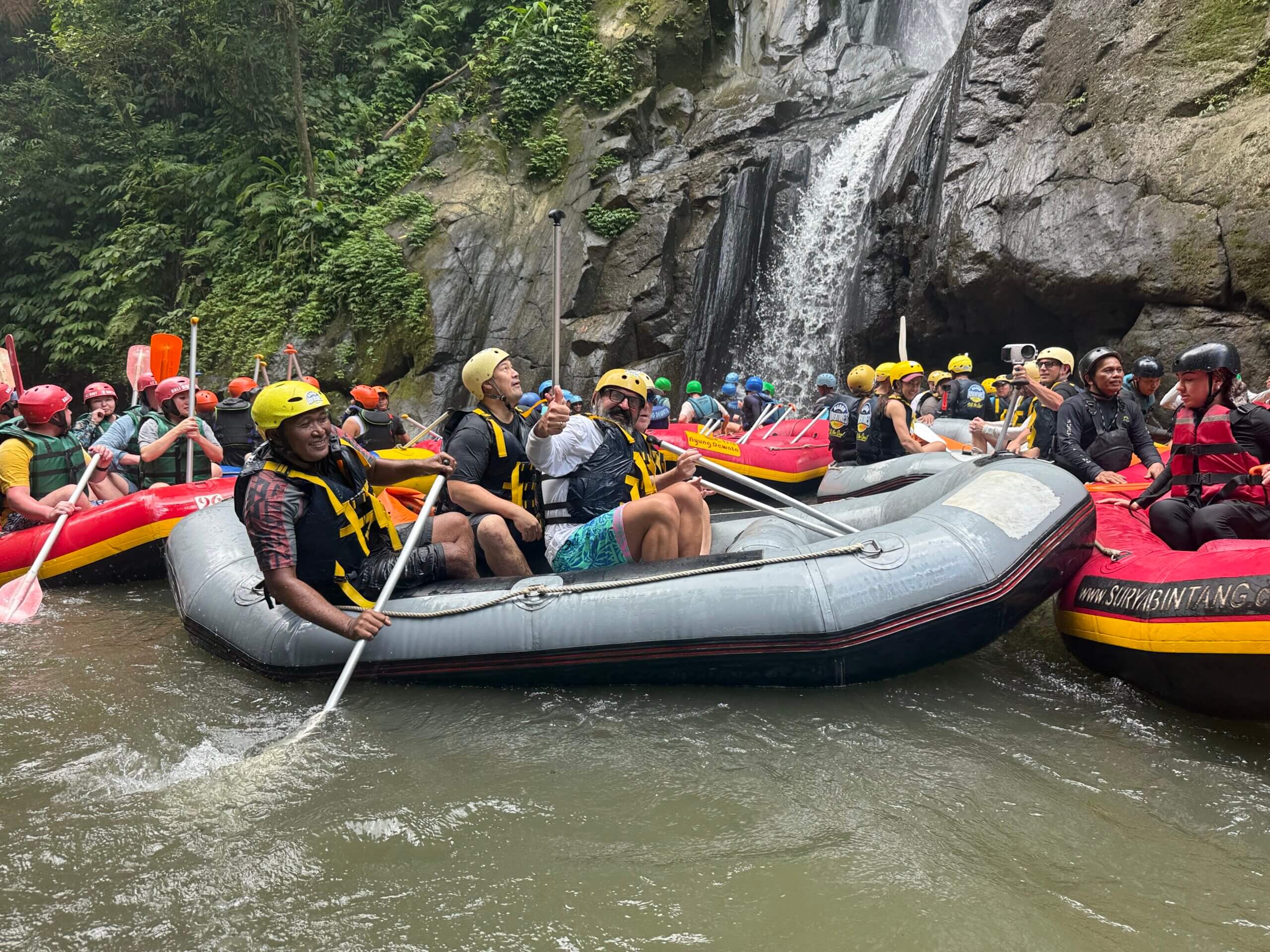
Plan a comfortable pace with memorable local experiences, time to relax, and a celebration that recognizes specific achievements. A customer service employee who helped save a major account deserves to hear how their work contributed.
Address accessibility, dietary needs, travel documentation, and employees who cannot travel. Publish a meaningful alternative in advance. Reward preferences differ, so travel works best as a thoughtfully chosen signature reward within a broader program.
Protect time for enjoyment. A trip filled with meetings gives employees less opportunity to experience the reward they worked toward.
Build the budget and operating plan before launch
Budget for the entire program: smaller rewards, administration, communications, tracking, travel, guests, and contingencies. Travel costs should include airfare, hotels, transfers, meals, activities, staffing, and the promised team experience.
Model low, expected, and high qualification scenarios. If everyone meeting a threshold earns the trip, fund that promise. A fixed-seat competition needs different rules, including ranking and tie-breakers, disclosed from the start.
Assign a program owner and clear responsibilities. HR oversees fairness and employee communication. Sales leaders validate sales results. Operations leaders validate their scorecards. Finance approves funding and reviews reporting and tax treatment. The travel partner manages the trip experience and logistics.
Choose a tracking system that supports separate earning rules, validated data, approvals, point corrections, and useful reporting. Restrict access to employee information and give participants a simple way to question a missing or incorrect award.
Launch clearly and keep the goal visible
Pilot the scoring and tracking process with a representative group before the full launch. Use the pilot to catch confusing rules, data problems, and uneven earning opportunities.
At launch, share the destination, travel dates, qualification period, included expenses, and earning rules. Walk through a sample scorecard so employees can see how the math works.
Set a steady communication rhythm:
- Monthly: Send personal progress updates, team goal updates, and reminders about available earning opportunities.
- Quarterly: Validate results, reconcile points, recognize milestones, and review participation across employee groups.
- Before travel: Confirm qualification, registration, guest arrangements, documentation, and accommodation needs.
- After travel: Gather feedback, share approved photos and stories, and follow up on business results.
Train managers to explain the program and recognize contributions along the way. Avoid changing thresholds after employees have started working toward them. Any exceptional adjustment needs a clear, consistent process.
Measure performance and retention beyond the trip
Track sales growth alongside margin and customer quality. Monitor participation, earning patterns, employee perceptions of fairness, and voluntary turnover over a meaningful period. For wholesale customer programs, track account retention separately from employee retention.
The IRF’s 2026 measurement study found that fewer than one in four surveyed program owners tracked ROI or cost-benefit analysis. Its findings point to the need to measure business impact alongside the attendee experience. [3]
For a credible evaluation, compare results with the baseline and, where practical, similar groups that did not participate. Account for seasonality, territory differences, and other business changes. Stronger results among trip winners alone do not prove the program caused the improvement.
For financial ROI, compare attributable incremental profit with the full program cost. Keep retention estimates separate unless you can support the attribution, and avoid counting the same benefit twice.
Gallup and Workhuman followed nearly 3,500 employees from 2022 to 2024 and found that well-recognized employees were 45% less likely to have left their organization after two years. That finding supports investing in recognition; it does not predict the retention result of a specific points or travel program. [4]
Give your team a destination to work toward
A well-designed rewards program makes the connection between effort and recognition easy to see. Separate earning criteria help different roles participate fairly. Regular rewards keep progress visible. A shared travel experience gives employees an opportunity to celebrate their success together.
At Destinations, we help companies create incentive travel experiences built around their employees, customers, and business goals. If you are developing a new rewards program or refreshing an existing one, let’s talk about the trip your people would be excited to earn.
Start planning with Destinations
Sources
- Incentive Research Foundation, Incentive Travel Toolkit, Section 3: Program Design Best Practices
- Incentive Research Foundation, Participant Preferences: Reward and Recognition Programs, 2026
- Incentive Research Foundation, Measuring Incentive Travel Program Effectiveness, 2026
- Gallup, Employee Retention Depends on Getting Recognition Right, September 18, 2024
- Incentive Research Foundation, Using Incentives to Drive Pipeline, 2026